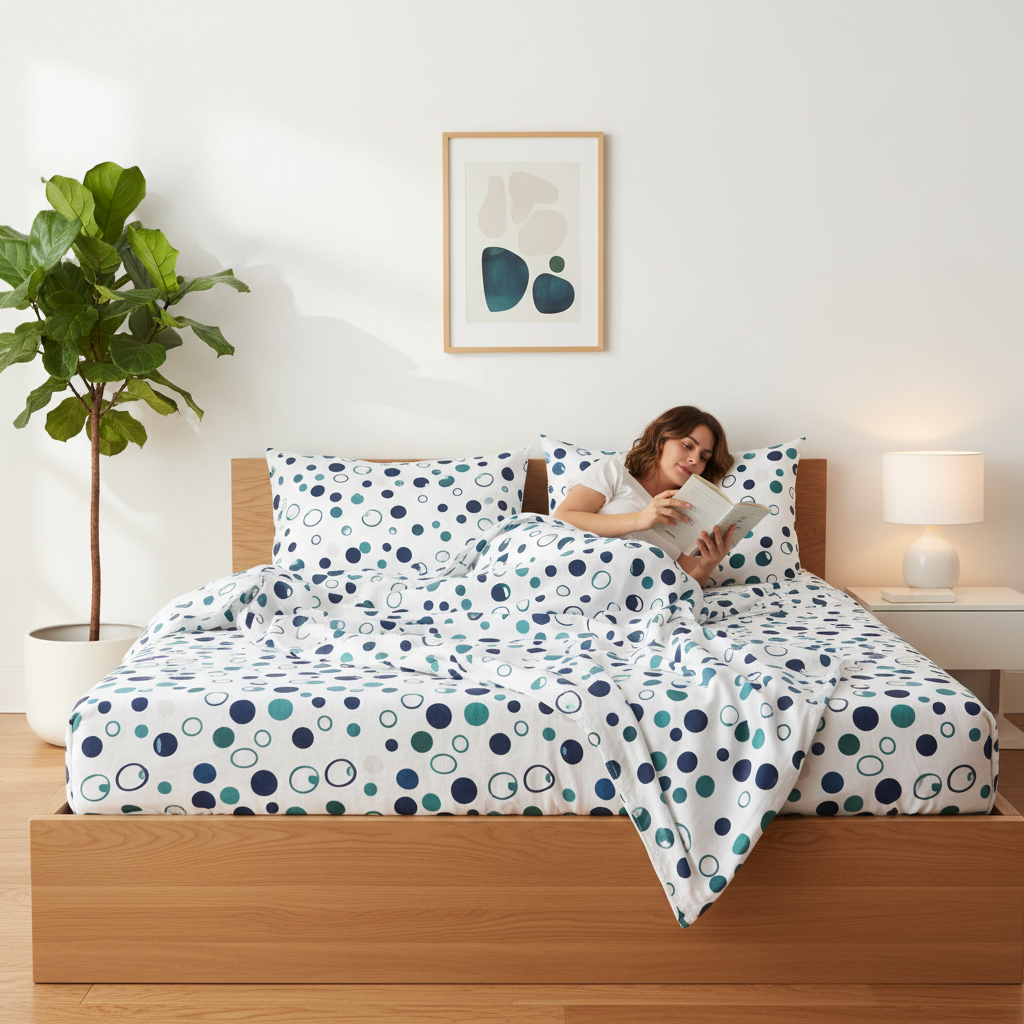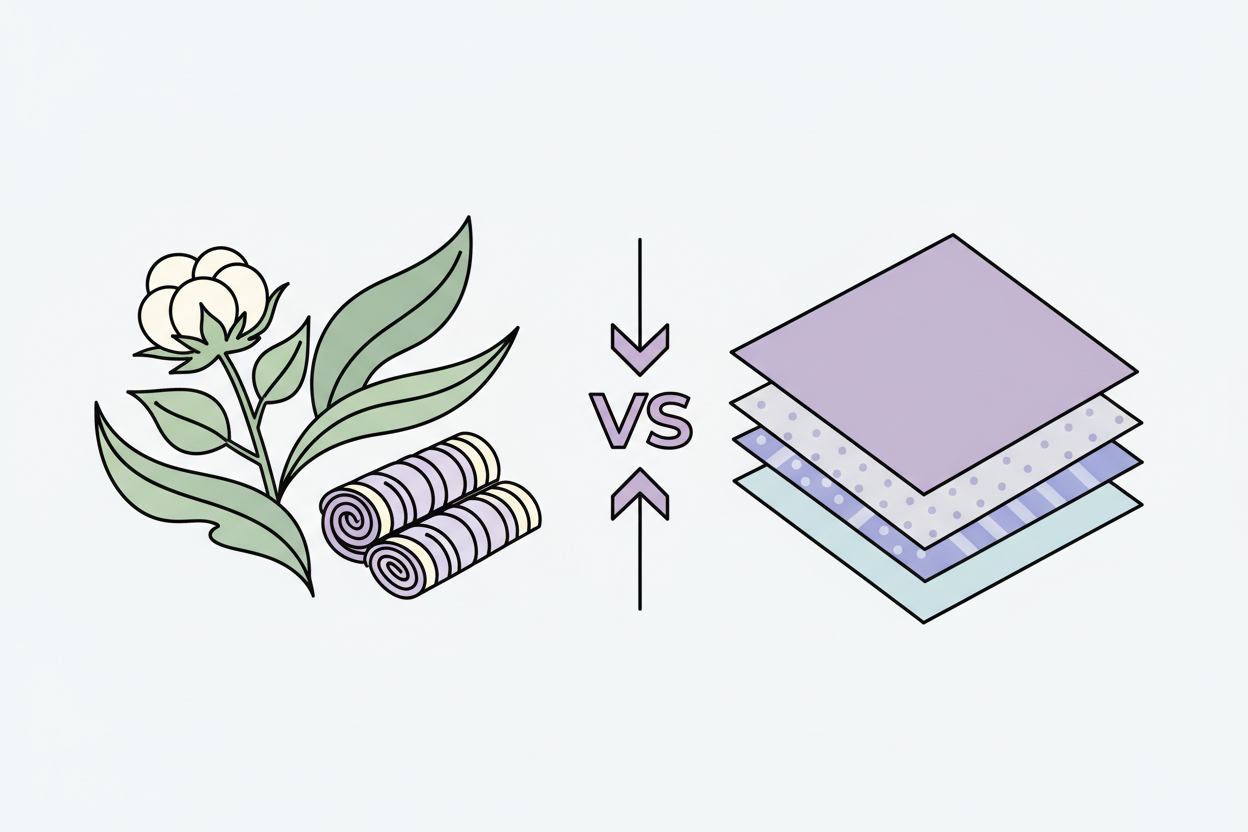
The fabric your sheets are made from shapes nearly every aspect of how they feel, how warm or cool they keep you, how they hold up over time, and how much effort they take to maintain. Yet with so many materials on the market, the choice can feel overwhelming.
This guide breaks down the key differences between natural and synthetic bedding fabrics, so you can make a decision that actually fits your sleep habits and lifestyle.
Natural Fabrics
Natural fabrics come from plant or animal sources and have been used in bedding for centuries. They're generally valued for their breathability and the way they feel against skin over time.
Cotton
Cotton is the most widely used bedding material in the world, and for good reason. It's breathable, durable, and softens with every wash. The quality of cotton varies considerably depending on fiber length. Long-staple varieties like Egyptian and Pima cotton produce a finer, smoother thread that holds up better over time. Cotton is also available in a range of weaves (percale, sateen, jersey) that each produce a noticeably different feel, from crisp and cool to smooth and warm.
One thing to keep in mind: cotton can wrinkle, and it may shrink slightly after the first wash if not pre-shrunk. Washing in cold water and drying on low heat helps minimize this.
Linen
Made from flax fibers, linen is one of the most breathable fabrics available. It's naturally textured, highly durable, and becomes noticeably softer with regular use and washing, which means a linen sheet that feels stiff at first will often become a favourite over time. Linen is particularly well-suited to warm climates and hot sleepers, and it brings a relaxed, lived-in aesthetic to the bedroom.
The trade-off is that linen wrinkles easily and tends to cost more upfront. Whether that's a drawback depends on how much you value longevity and breathability.
Silk
Silk is one of the most luxurious bedding materials available. It's smooth, naturally temperature-regulating, and gentle on both skin and hair. It's also naturally resistant to dust mites and mold. The downsides are significant though: silk is expensive, requires delicate care (often dry-clean only), and is less durable than most other options. It's a premium choice for those who prioritize feel above all else.
Synthetic Fabrics
Synthetic fabrics are manufactured rather than grown, and modern versions have improved considerably. They tend to be more affordable and easier to care for, though they come with trade-offs around breathability and environmental impact.
Microfiber (Polyester)
Microfiber is made from very finely woven polyester fibers. It's lightweight, wrinkle-resistant, quick-drying, and easy to care for, which makes it a practical everyday option. It's also resistant to dust mites, which can be a benefit for allergy sufferers.
The main limitation is breathability. Microfiber tends to trap heat and moisture more than natural fabrics, which can be uncomfortable for warm sleepers. It's also not biodegradable and sheds microplastics when washed, which is worth considering if environmental impact matters to you.
Rayon, Modal, and Tencel
These semi-synthetic fabrics sit somewhere between natural and synthetic. They're made from wood pulp (often eucalyptus) and processed into a soft, silky fiber. They drape well, absorb moisture effectively, and feel noticeably softer than standard polyester. Tencel in particular uses a more environmentally responsible production process.
The trade-off is durability. These fabrics can be less robust when wet and may require more careful washing to maintain their feel over time.
Blended Fabrics
Many bedding products combine natural and synthetic fibers to balance the strengths of each. Cotton-polyester blends, for example, offer cotton's breathability alongside polyester's wrinkle-resistance. Linen-cotton blends soften linen's texture while keeping its cooling properties. These can be a practical middle ground, particularly if low-maintenance care is a priority.
How to Choose
The right fabric depends on a few key factors:
- Sleep temperature: Hot sleepers generally do better with natural fabrics like linen or cotton percale. Cold sleepers may prefer sateen weaves, flannel, or microfiber.
- Skin sensitivity: Natural fabrics, particularly organic cotton and silk, tend to be gentler on sensitive skin. High-quality microfiber can also be hypoallergenic.
- Maintenance: Microfiber and cotton-poly blends are the easiest to care for. Linen and silk require more attention.
- Budget: Microfiber and blended fabrics offer the most accessible price points. Quality cotton sits in the mid-range. Linen and silk are longer-term investments.
- Environmental priorities: Organic linen, organic cotton, and Tencel are generally considered the most sustainable options.
It's also worth remembering that quality matters as much as material type. A well-made synthetic sheet can outperform a poorly made natural one. When in doubt, check the construction details, including fiber length, weave type, and finishing, not just the fabric label.
Once you've narrowed down what you're looking for, take a look at our bedsheets collection to see what's currently available.