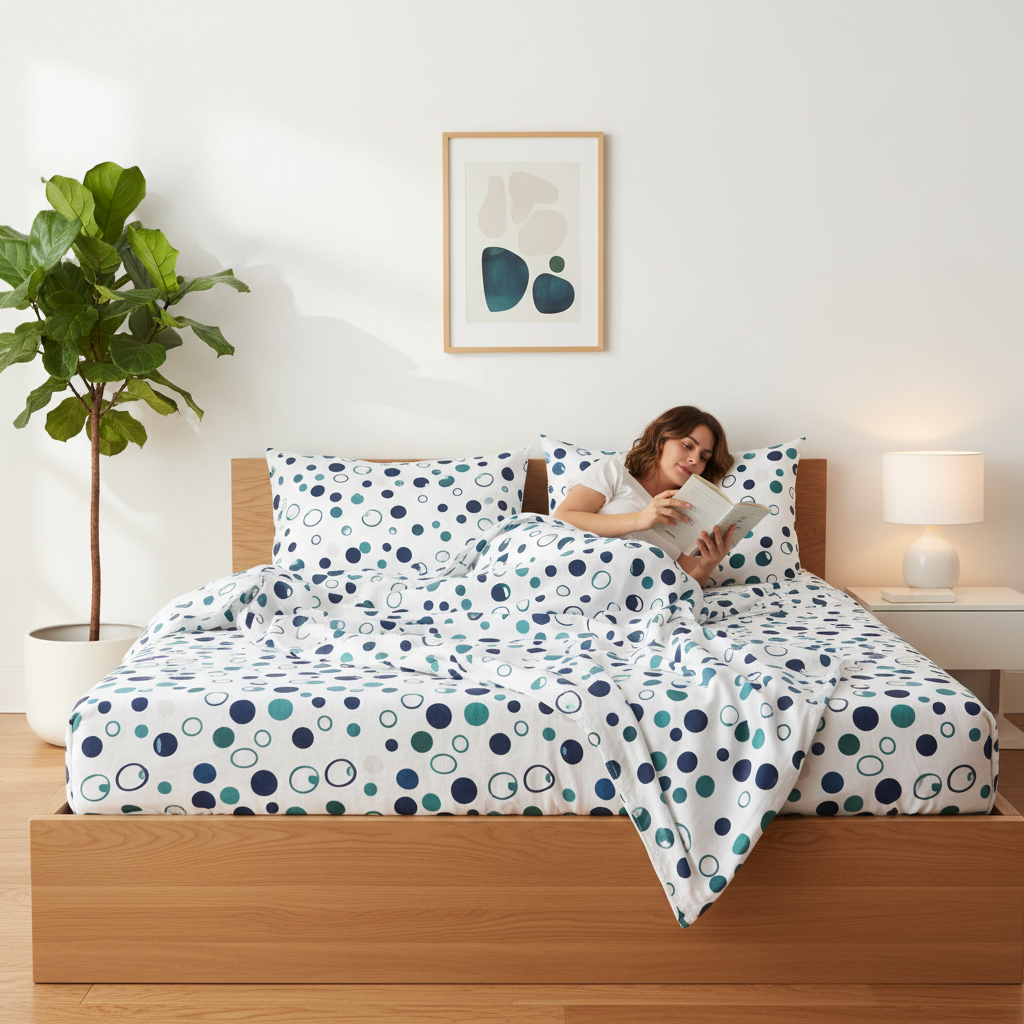
If you regularly wake up hot, kick off your covers, or find yourself flipping your pillow looking for a cool spot, your bedding is likely part of the problem. The materials you sleep in have a direct effect on how well your body regulates temperature overnight, and making the right choice can meaningfully improve your sleep.
This guide covers what actually makes bedding breathable, what to look for when shopping, and how to match your choice to your sleep style.
Why Body Temperature Matters for Sleep
As part of your natural sleep cycle, your core body temperature drops slightly in the evening. This cooling process is part of what signals your body that it's time to rest. When your bedding traps heat and prevents that cooling from happening, it can disrupt your sleep, causing restlessness, night sweats, and lighter, less restorative rest.
The good news is that the right bedding can work with your body rather than against it.
What "Breathable" Actually Means
Breathability in bedding refers to how well a fabric allows air to circulate and heat to escape. A breathable sheet doesn't trap warmth against your body; it lets it dissipate. Breathable fabrics also tend to manage moisture more effectively, wicking sweat away from your skin rather than letting it sit.
Breathability is determined by a combination of factors: the fiber type, the weave structure, and the weight of the fabric. A fabric can be made from a naturally breathable material but woven so tightly that it loses most of that benefit. This is why thread count alone isn't a reliable indicator. A moderate thread count in an open weave often outperforms a very high thread count in a dense one.
Fabric Types and How They Perform
Natural Fabrics
Natural fibers like cotton and linen are generally well-regarded for breathability. They tend to allow more airflow than synthetics and feel comfortable against skin over time. Within natural fabrics, the weave makes a significant difference: a percale weave (crisp, matte, one-over-one-under) is typically cooler than a sateen weave (smooth, slightly warm, denser construction). Linen is particularly breathable and tends to suit hot sleepers well, though it has a more textured feel than cotton.
Synthetic Fabrics
Synthetic fabrics like polyester and microfiber are durable, affordable, and easy to care for. They tend to retain more heat than natural fibers, which can be a drawback for warm sleepers. That said, some performance synthetics are engineered specifically for moisture management and airflow, so it's worth looking at how a fabric is constructed rather than dismissing it based on material alone.
Blended Fabrics
Blended fabrics combine natural and synthetic fibers to balance the strengths of each. A cotton-polyester blend, for example, can offer cotton's breathability with polyester's wrinkle-resistance and durability. Performance varies significantly depending on the specific blend and construction, so it's worth reading the details rather than relying on the label.
Common Mistakes That Lead to Overheating
A few simple choices can make a significant difference if you tend to sleep warm:
- Using heavy bedding year-round: A thick duvet that's perfect in January can trap too much heat by April. Rotating to a lighter layer seasonally is one of the easiest adjustments you can make.
- Prioritizing appearance over performance: A duvet cover that looks great but traps heat won't help you sleep better. Fabric performance matters as much as aesthetics.
- Assuming higher thread count means better breathability: A denser weave can actually reduce airflow. A moderate thread count in an open, breathable weave often performs better for hot sleepers.
- Not accounting for how fabric feels during sleep: How a sheet feels in your hands in a store can differ from how it feels against your skin at 2am. Look for return policies or trial periods when trying something new.
Matching Bedding to Your Sleep Style
Hot Sleepers
If you regularly wake up warm or sweaty, prioritize lightweight fabrics with an open weave and good moisture-wicking properties. Percale cotton and linen are commonly recommended for this reason. Avoid heavy duvets and dense weaves, and consider a lighter top layer that you can easily push aside if needed.
Cold Sleepers
If you tend to feel cold at night, you'll want bedding that retains a bit more warmth. Sateen weaves and slightly heavier fabrics can provide that without sacrificing too much breathability. Layering, such as a breathable sheet set with a warmer blanket on top, gives you flexibility to adjust.
All-Season Sleepers
If your comfort needs shift with the seasons, a layering approach works well. A breathable base sheet set stays consistent year-round, while you swap out the top layer, lighter in summer and warmer in winter, as needed.
Keeping Breathability Over Time
Even the most breathable bedding will underperform if it's not cared for properly. Buildup of body oils, sweat, and detergent residue can reduce a fabric's ability to wick moisture and allow airflow. Washing regularly in cold or warm water with a mild detergent, avoiding fabric softeners on natural fibers, and following the care label on your specific sheets will help maintain performance over time.
If you're ready to make a change, take a look at what's available in our bedsheets collection, or revisit our guide on how to choose the perfect bedsheets if you're starting from scratch.