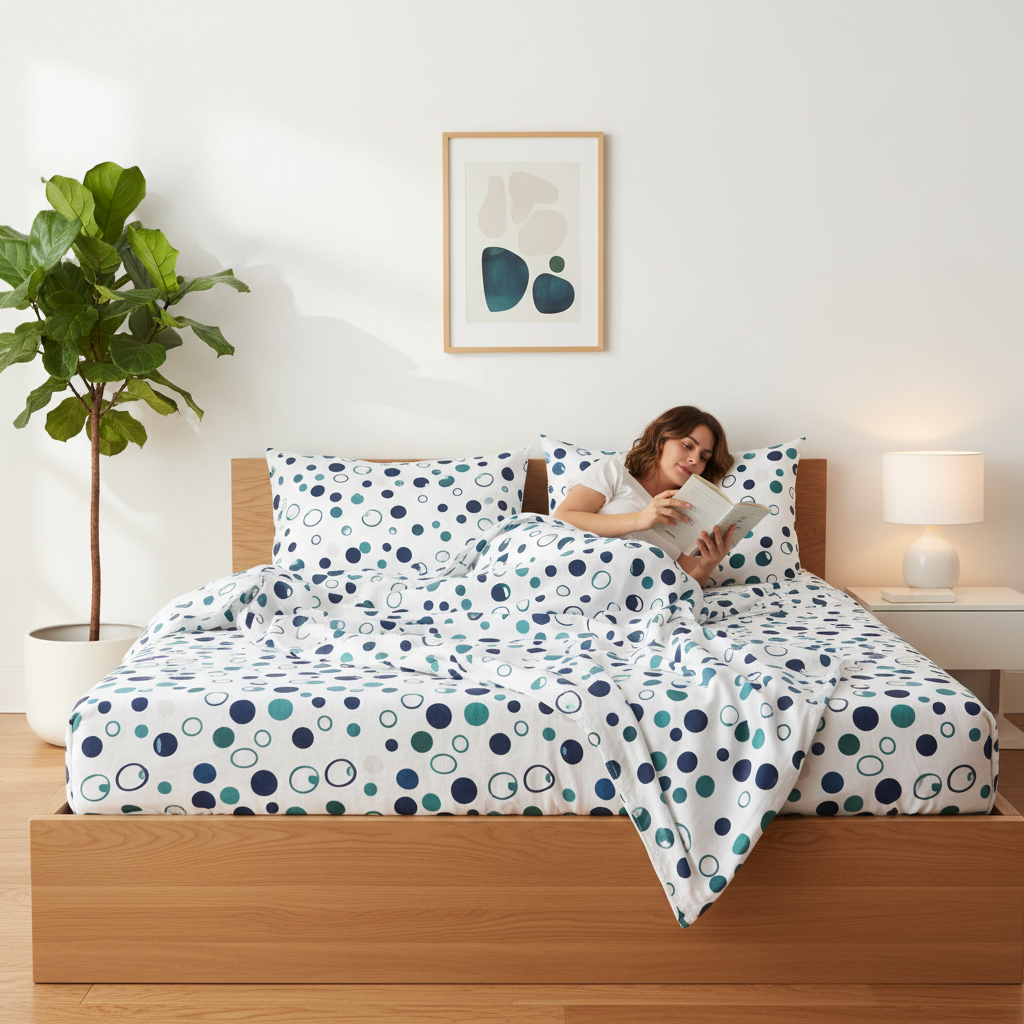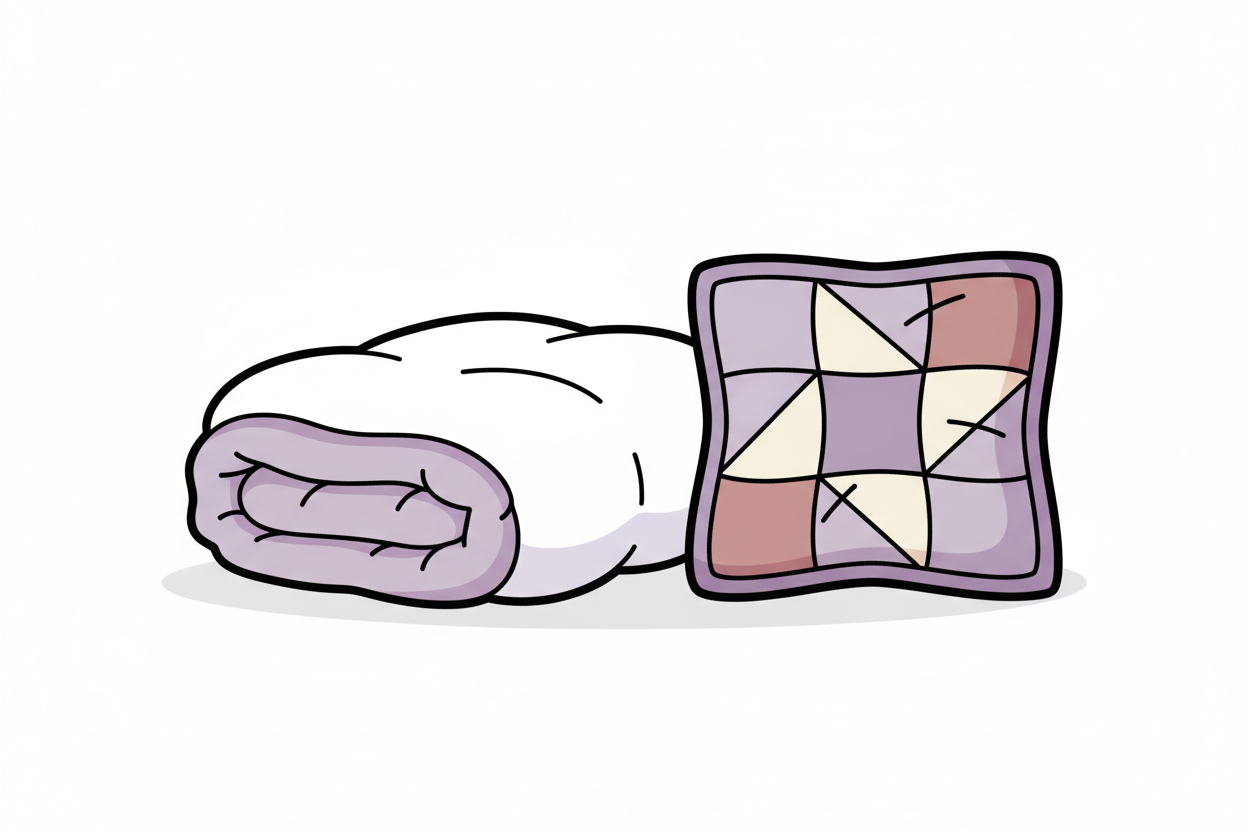
Comforters and quilts are easy to confuse. Both sit on top of your bed, both add warmth, and both come in a wide range of colours and patterns. But they're built differently, they perform differently, and they suit different kinds of sleepers. Choosing the wrong one won't ruin your sleep, but choosing the right one can meaningfully improve it.
This guide breaks down exactly how comforters and quilts differ, where each one excels, and how to decide which is the better fit for your bedroom.
How They're Constructed
The most fundamental difference between a comforter and a quilt is how they're made.
Comforters
A comforter is a single, quilted piece of bedding made up of two outer fabric layers stitched together and filled with an insulating material. The fill is what gives a comforter its loft and warmth. Common fill types include down, down-alternative (polyester microfiber), and wool. The outer shell is typically a smooth woven fabric, often cotton or a cotton-polyester blend, and the stitching pattern holds the fill in place so it doesn't shift or bunch unevenly.
The result is a thick, fluffy layer of bedding that's designed primarily for warmth and comfort. Comforters are usually sold as a single piece, though they're often paired with a duvet cover for protection and easy washing.
Quilts
A quilt is made from three distinct layers: a decorative top, a thin batting layer in the middle, and a backing fabric on the bottom. The three layers are stitched together, typically in an intricate pattern, which is what gives quilts their characteristic texture and visual detail. Traditional quilts are handmade, with the top layer pieced together from smaller fabric panels, though modern quilts are often machine-made with printed or woven tops.
Because the batting layer in a quilt is thinner than the fill in a comforter, quilts are generally lighter and less insulating. They're designed as much for decoration and layering as they are for warmth.
Warmth and Insulation
If warmth is your primary concern, comforters have a clear advantage. The thick fill layer, particularly in down or high-quality down-alternative versions, traps significantly more heat than the thin batting in a quilt. A good comforter can function as your sole top layer through cooler months without needing anything underneath it.
Quilts are lighter and breathe more easily, which makes them better suited to warmer climates, warmer seasons, or sleepers who tend to run hot. They work well as a standalone layer in summer or as an additional layer over a sheet set in transitional weather. In colder months, most people find a quilt alone isn't enough and will layer it over a blanket or under a duvet.
If you're a hot sleeper looking for a breathable top layer, a quilt is worth considering. If you sleep cold or want one piece of bedding that handles most of the year, a comforter is the more practical choice. For more on matching bedding to your sleep temperature, see our guide on how to stay cool at night.
Weight and Feel
Comforters are heavier and loftier. The fill gives them a cloud-like quality that many people find deeply comfortable, and the weight can feel grounding and cozy, especially in colder weather. Down-filled comforters in particular are known for being warm without feeling heavy, since down traps heat efficiently without adding much mass.
Quilts are noticeably lighter and flatter. They drape more closely to the body rather than puffing up above it. Some people prefer this feel, particularly those who find heavy bedding uncomfortable or who move around a lot during sleep. The lighter weight also makes quilts easier to manage when making the bed.
Aesthetics and Bedroom Style
This is where quilts have a distinct edge. The stitched patterns, pieced fabric tops, and layered construction of a quilt give it a visual richness that a comforter typically can't match. Quilts are a natural fit for bedrooms with a more textured, layered, or artisan aesthetic, and they're often used as a decorative accent even when they're not the primary source of warmth.
Comforters tend to have a cleaner, more uniform look. They work well in modern, minimalist, or hotel-inspired bedrooms where the goal is a smooth, polished surface. When used with a duvet cover, a comforter can take on almost any look depending on the cover you choose, which gives you more flexibility to update the style of your bedroom without replacing the comforter itself.
Care and Maintenance
Quilts are generally easier to care for. Because they're thinner and lighter, most quilts can be washed in a standard home machine and dried without issue. The flat construction also means they dry relatively quickly compared to a thick comforter.
Comforters require more care, particularly those filled with down. They need a large-capacity machine to wash properly, a long drying cycle on low heat, and careful attention to make sure the fill is completely dry before use. Down-alternative comforters are more forgiving, but still benefit from a larger machine and a gentle cycle. For a full breakdown of how to wash and dry a comforter properly, see our guide on how to care for your duvet or comforter.
Using a duvet cover over a comforter significantly reduces how often you need to wash the comforter itself, since the cover takes the brunt of daily contact and can be laundered weekly like your bedsheets.
Layering and Versatility
Quilts are inherently more versatile as a layering piece. Because they're lighter, they can be added or removed easily as temperatures shift, and they work well folded at the foot of the bed as a decorative accent. Many people use a quilt as a mid-layer between a sheet set and a heavier blanket or duvet in winter, then use it as the primary top layer in summer.
Comforters are less flexible in this way. They're designed to be the main event, not a supporting layer. That said, a lighter-weight comforter can work year-round in moderate climates, and swapping between a summer-weight and winter-weight comforter is a practical approach if you want the warmth and loft of a comforter across all seasons.
Price and Value
Both comforters and quilts span a wide price range depending on materials and construction quality. As a general rule, down comforters sit at the higher end of the market, while down-alternative comforters and machine-made quilts are more accessible. Handmade or artisan quilts can be expensive, but mass-produced quilts are typically affordable.
When evaluating value, it's worth thinking about longevity. A well-cared-for down comforter can last 10 to 15 years. A quality quilt, particularly one made from durable cotton, can last just as long. The upfront cost matters less than how well the piece holds up over time and how well it suits your actual sleep habits.
Which One Is Right for You?
There's no universal answer, but a few questions can help narrow it down:
- Do you sleep cold? A comforter, particularly one with a down or down-alternative fill, will keep you warmer than a quilt.
- Do you sleep hot? A quilt's lighter construction and better breathability make it a more comfortable choice.
- Do you want one piece of bedding that does most of the work? A comforter is more self-contained and requires less layering.
- Do you prefer a layered, textured look on your bed? A quilt gives you more visual interest and works well as part of a layered setup.
- How much maintenance are you willing to do? Quilts are easier to wash at home. Comforters, especially down-filled ones, require more care.
- Do you want flexibility across seasons? A quilt layers more easily and adapts better to changing temperatures.
If you're still deciding, it's also worth considering that the two aren't mutually exclusive. Some people use a comforter as their primary warmth layer and keep a quilt folded at the foot of the bed for extra coverage or decoration. The combination works well and gives you flexibility without committing entirely to one approach.
A Note on Duvets
You may have noticed that duvets come up frequently in conversations about comforters. The two are closely related: a duvet is essentially a comforter designed to be used inside a removable cover. In practice, the terms are often used interchangeably, though duvets tend to be sold without a cover (which you purchase separately) while comforters are typically sold as a finished piece. If you're comparing all three, the duvet-and-cover system offers the most flexibility for updating your bedroom's look without replacing the insert.
If you're ready to shop, take a look at our bedding collection to see what's currently available, or revisit our guide on how to choose the perfect bedsheets if you're building out your full sleep setup from scratch.